
Sad complexity
Polemic triptych - three

Trying to understand reality requires choosing a combination of lenses. Epistemological lenses orient us to define what knowledge is and whether it can be objective. Theoretical lenses help us unpack reality into moving parts and identify mechanisms governing their interactions. Methodological lenses give us tools to study reality, whether deductively or inductively, generating insights that falsify theories and contribute to knowledge. Believing that those aren't lenses and that one simply sees clearly is akin to an intellectual harakiri.
One of my most beautiful friendships deepened while working on a joint paper. We spent long moments exchanging between his mathematical reasoning and my understanding of political systems, leading to one of the few formal models in policy process studies. Our common excitement? Complexity science.
Complexity science offers a combination of lenses that resonates with us deeply. Epistemologically, complexity science is realist (and if you disagree, please read below). Theoretically, complexity science brings a theory that unpacks complex systems into moving parts, feedback loops, micro- and macro-level properties. Methodologically, complexity science offers a vast range of tools, especially computational, which blends deductive and inductive reasoning, even when theoretical arguments are weak or when data is scarce. When wielded properly, these lenses reveal patterns that traditional approaches might miss.
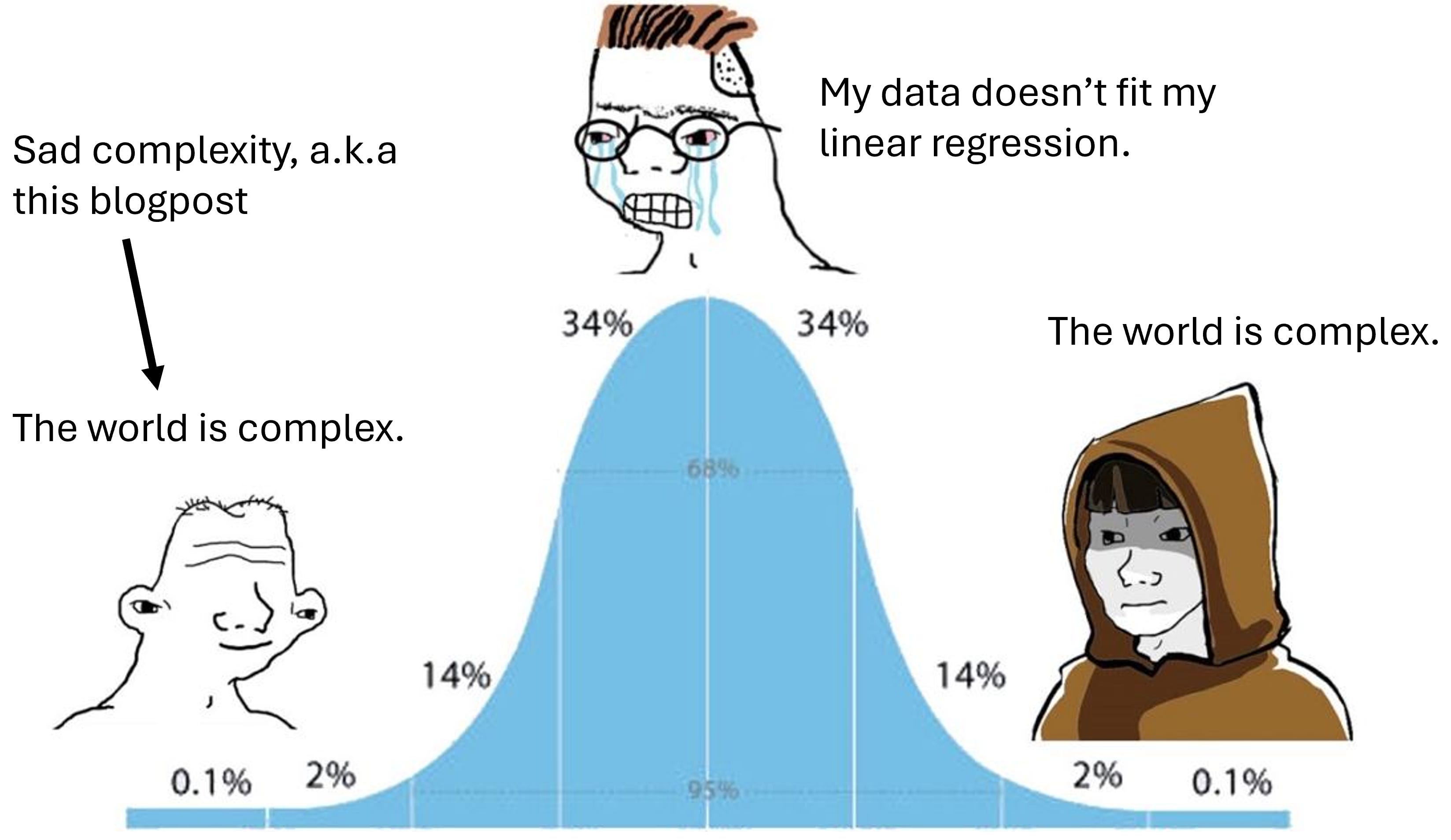
Now, the sad and frustrating story is that complexity science is often ruined by its misuse.
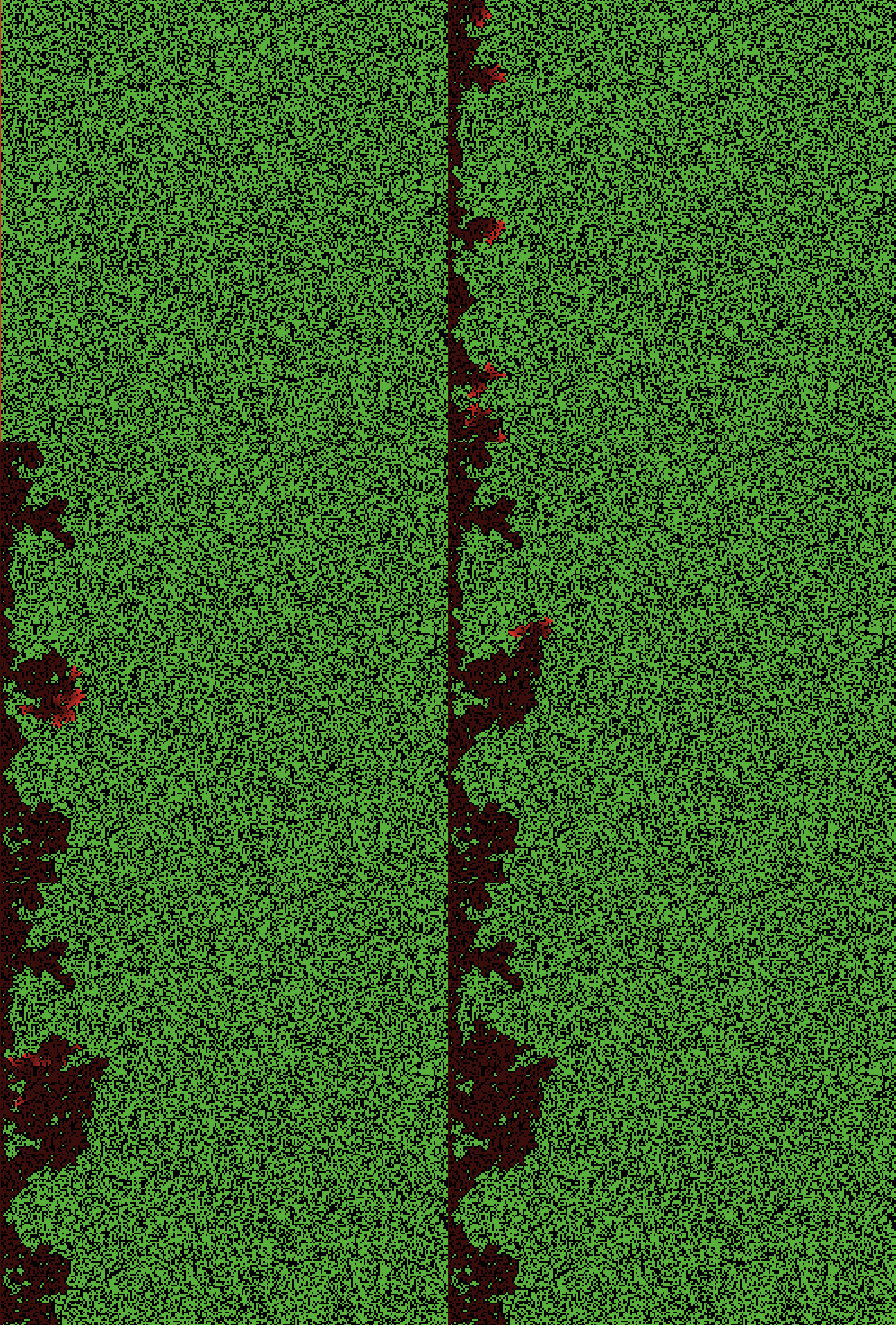
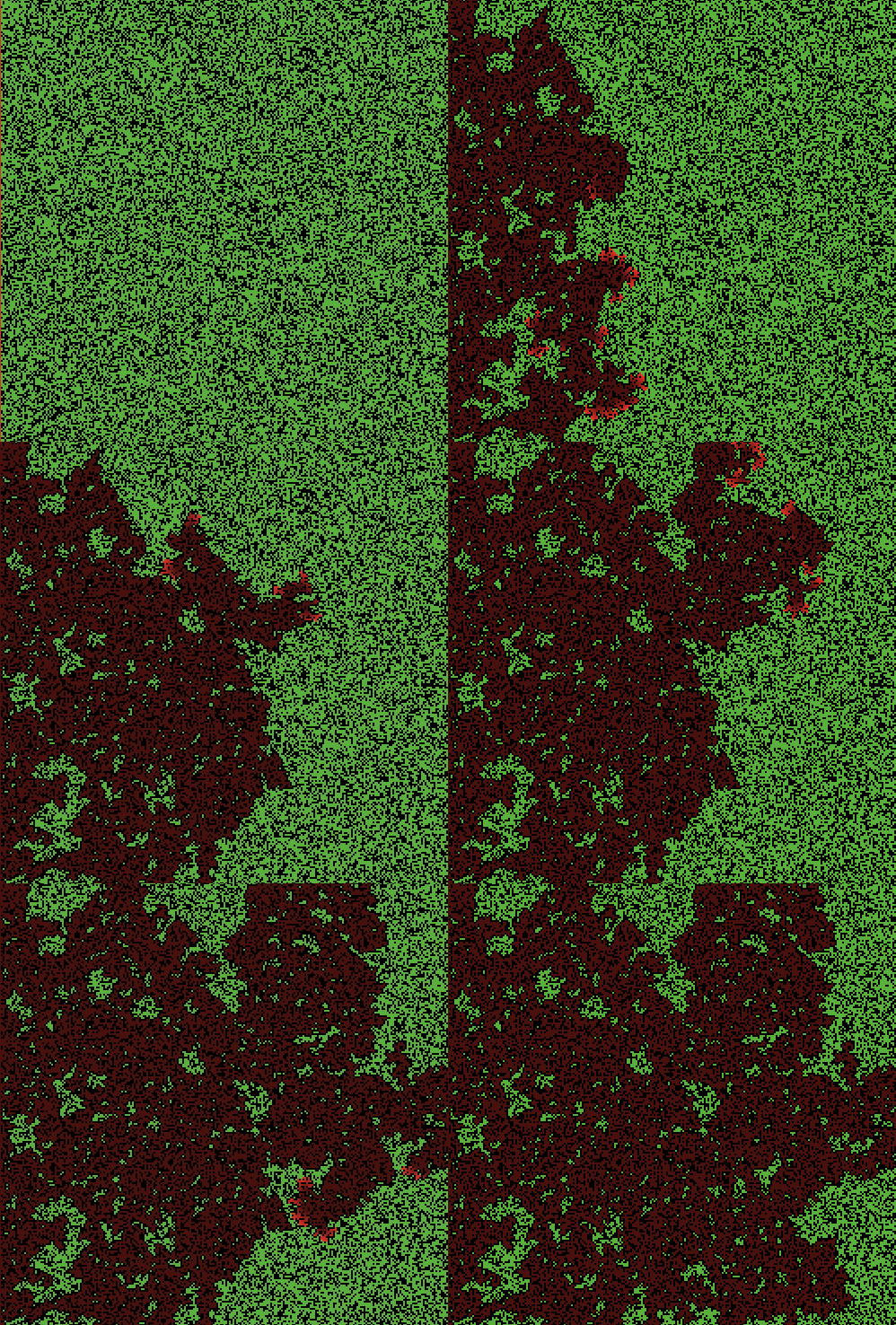
First, there's the relativizing misuse. Consider two forests: one has 58% tree density, and a fire burns 10% of its trees. Add just 1% more density to the second forest, and the same fire consumes 71% of trees. This dramatic nonlinearity leads some to throw up their hands, claiming that if tiny changes can have such massive effects, prediction is impossible. But they miss the point: nonlinearity doesn't make systems unpredictable; it makes prediction more challenging. That’s it. Understanding these critical thresholds actually enhances our predictive power, even if it humbles our expectations of precision.
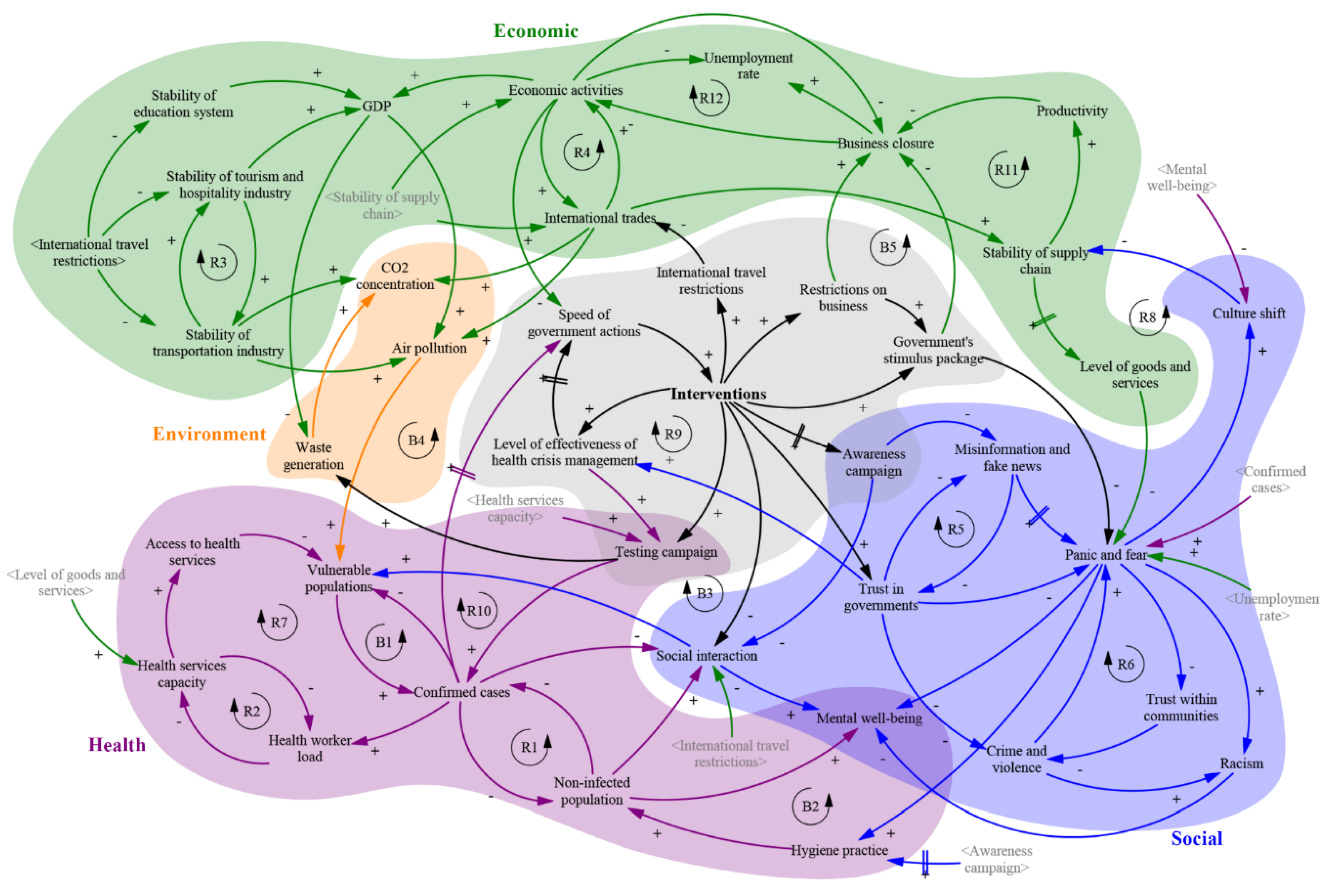
Then there's the nuancing misuse. One of my favorite papers is titled "Fuck Nuance" – making the point that nuance ≠ knowledge. During the COVID-19 pandemic, researchers mapped cascading effects across society's systems. These maps revealed intricate feedback loops: government trust affects compliance with health measures, which affects infection rates, which affects economic stability, which affects government trust. Some used these interconnections to argue that "everything affects everything," making causation impossible to determine. This is intellectual surrender. Identifying feedback loops should enhance explanation, not prevent it. Two feedback relationships can be true and measurable without nullifying each other.
Finally, we face the metaphorical misuse. Look at this visualization of the complexity of global risks by the World Economic Forum. It's visually stunning but analytically hollow. This is complexity science as art, not analysis. Social scientists, generally teaching only regression methods, ironically regress to metaphors, vague descriptions, and taxonomies when facing complex systems.
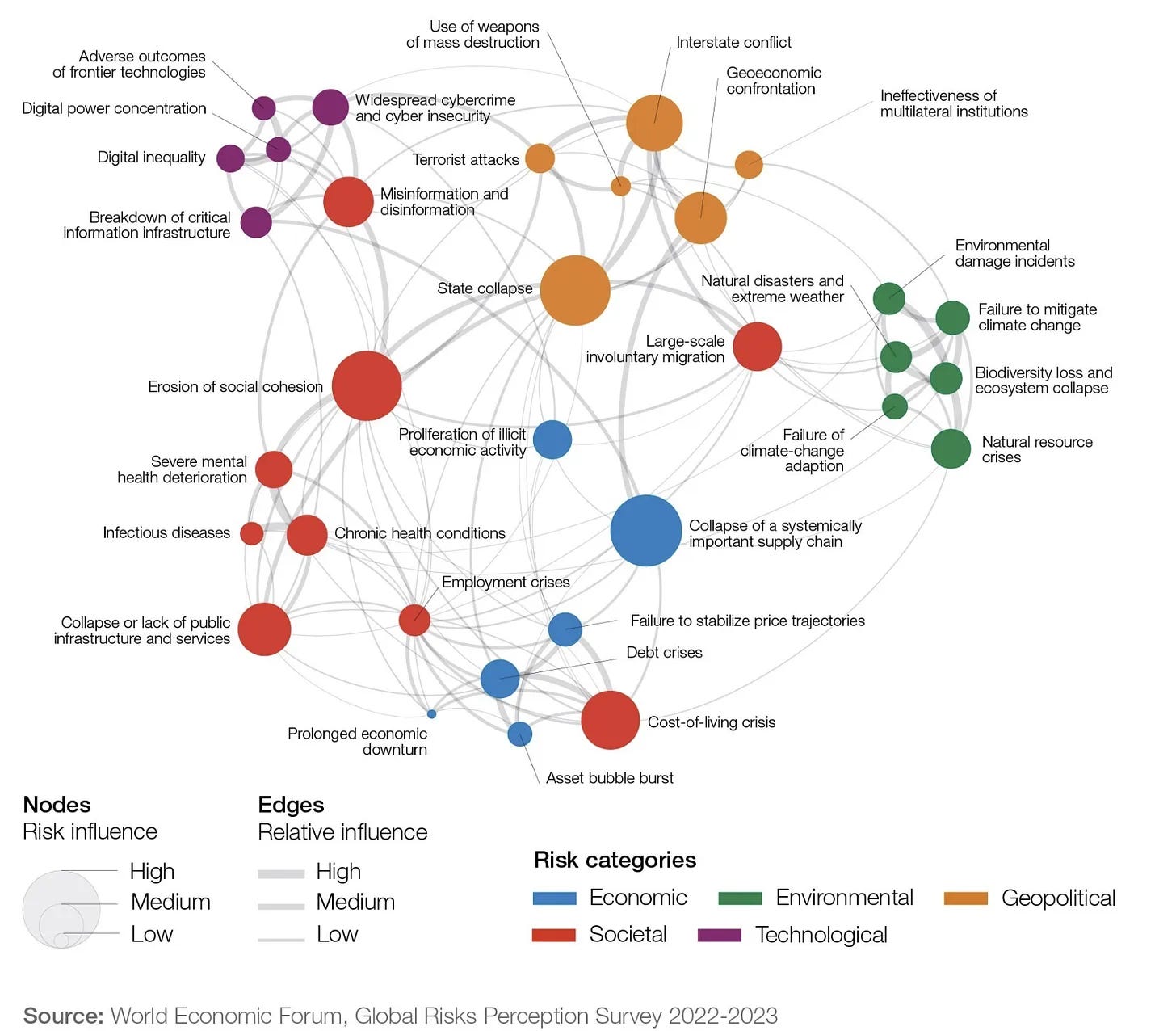
The tragedy – and what makes complexity science so sad – isn't just that it's misused; all scientific tools face misuse. The tragedy is that these misuses threaten to obscure complexity science's real promise: helping us understand and navigate an interconnected world. Critics from mainstream fields often point to these misuses as evidence of complexity science's low quality. But this criticism reveals more about the scientific community's lack of proper training in complexity methods than about complexity science itself.
The solution isn't to abandon complexity science but to use it more rigorously. Yes, small changes can have big effects – so let's identify those thresholds. Yes, everything is connected – so let's quantify those connections. Yes, behaviors emerge – so let's simulate their patterns. The task arguably is harder than mainstream science, but the potential insights are worth the challenge.
Complexity science remains one of our best tools for understanding how the world really works. But to realize this potential, we must move beyond metaphor to measurement, beyond nuance to knowledge, beyond relativism to rigor. Only then can we lift complexity science from its sad state and fulfill its promise of helping us navigate our intricate world. To read more about complexity science, I highly recommend the SFI press.